
Over the past year, some business owners have tried to build their own sites with AI coding tools, and a few of them have succeeded. These are competent people who look at an agency’s proposal or quote, compare it to their monthly subscription to Claude Pro, and make what seems like a completely rational, prudent decision.
Because Rare Bird is a marketing and web development agency, you might expect us to say that nobody should ever do this. In a few select cases, though, “vibe coding” your own site might be the right move. (A little more about that below.)
For the vast majority of businesses, however, vibe coding is the opposite of a strategic decision, and understanding why—before you dedicate a weekend to building something you might spend the next year cleaning up—is important.
The pasta–bilities are endless
If you have ten dollars and a family of four to feed, you can buy a box of pasta, a jar of sauce, some Kraft parmesan cheese, and a head of garlic. With those ingredients, you can feed your family for a night, and it will taste pretty good. (It’s pasta, after all.)
You have to make dinner. Everyone needs to eat. Nobody should tell you that’s the wrong choice.
Vibe coding a website is a similar choice. It checks the box of feeding your business. If you are a solo founder testing whether anyone wants your product, or someone running a side hustle, or you just need a landing page for a campaign that will only last a few weeks, at most, then you can probably stay home and cook that meal.
No one hires a chef to boil water. Some sites are we-have-spaghetti-at-home sites. But complications arise when the meal for a particular moment needs to be just right.
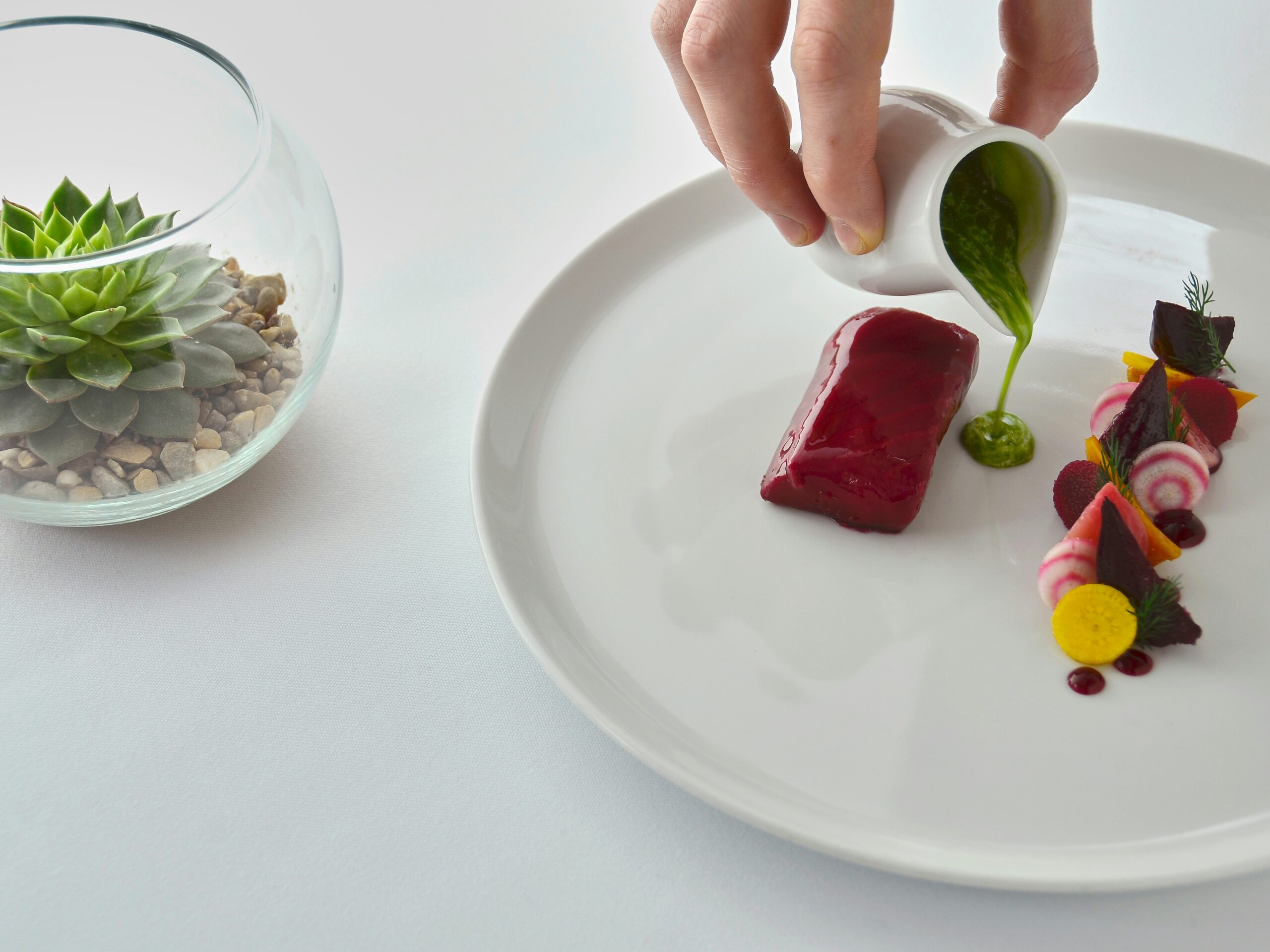
If you are hosting people you want to impress or celebrating something that only happens once a year (or once ever!), you need more than a box of dried pasta and a jar of processed sauce. You need better ingredients. You need a proven restaurant with a professional-grade kitchen staffed by people who can stand the heat, as they say.
A restaurant kitchen isn’t just a place to cook. It’s a showcase of experience and expertise in sourcing, technique, plating, pacing, and consistency.
A chef runs the kitchen and knows which supplier has the best heirloom tomatoes this week and which fish came in this morning. A chef can break down a whole animal, build a stock from its bones, and fix a broken sauce when something goes wrong just minutes before the first table orders on a Friday night. A chef can produce the same dish on every plate for a 200-person event with no variation. A chef can develop and run a system, and teach it to others.
A good home cook follows a recipe, which is important, but a recipe makes assumptions. It assumes the ingredients are good, fresh, and available, which is not always the case. A recipe also assumes the cook has the proper equipment, the equipment will work as intended, and nothing will go wrong along the way.
When something does go wrong—as a good home cook myself, I can tell you that something always goes wrong—a recipe cannot save you. And neither will the beautiful photography or the charming (if overly long) narrative introduction to that recipe.
Your company website is a meal your business serves to every prospect, partner, and potential hire. The cost of getting it wrong is incredibly high, but the upside of getting it right compounds over time.
When a meal needs to be just right—when the meal itself is a major event, a moment in time, a memory in the making—even those of us who know our way around the kitchen turn to the experts.
AI builds what you ask for
We have looked at a lot of vibe-coded websites and apps this year. They share a few patterns that may be invisible unless you know how to look.
The first is that the AI builds what you ask for, not what you need. The founder asks for a homepage with a hero, a services or products section, and a contact form at the bottom, and the AI delivers exactly that. What the AI does not deliver is a strategy. It may not ask about your ideal customer (or it might make assumptions), or how a prospect should move from the homepage to a conversation. Those are the questions a strategist asks before a single line of code gets written.
The site may look finished and “real,” but there’s a good chance it also looks (and reads) like all of your competitors’ websites. It’s hard to stand out from the crowd when you’re wearing a suit made to blend in.
The second pattern is that the code underneath can be hard to maintain. A recent Veracode study found that 45% of AI-generated code introduces security vulnerabilities. A separate analysis of more than 200 million lines of changed code found that AI-assisted code duplicates itself eight times more often than human-written code, and developers refactor it far less.
Everything works until you need to change something, and then nothing works. The person who “built” it is not a developer, so they ask the AI to fix it; the AI fixes one thing but breaks two more along the way. Rinse and repeat.
The third pattern is that a codebase made on vibes alone is not documented. There is no developer who can sit down and explain what a particular function does or why a particular library was chosen. If you want to add a feature later, hire a real developer to take it over, or hope to sell the business someday, somebody is going to spend the first month just figuring out what the hell they’re looking at.
The fourth pattern is that even people steeped in the vibe approach may not use it for their most important work. Andrej Karpathy, the researcher who coined the term “vibe coding,” even announced that he’d coded his most ambitious personal project himself, without AI’s help, because the AI tools were “net unhelpful.”
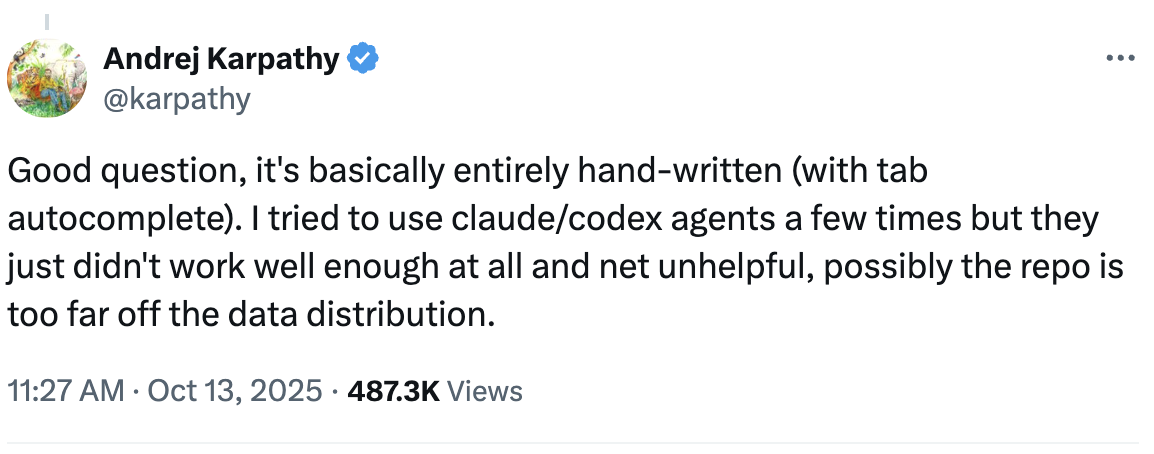
That’s the person who named this thing! When the code mattered most, even an experienced developer chose to write the code himself.
When can you vibe code it yourself?
There are a few cases:
- You are pre-revenue and testing whether anyone wants the thing you are making. (Throw it away when you have a real business.)
- You are building an internal tool that nobody outside the company will ever see. (You can rebuild it later if needed.)
- You need a one-off landing page for a campaign that runs for a few weeks and then is taken down. (That landing page is not meant to last.)
- You are a developer using AI to accelerate work you would otherwise do by hand, and you understand the code well enough to debug it when it breaks. (Use the tools. Your expertise matters more than ever before.)
When should you turn to the professionals?
- You’re a B2B company with a sales cycle longer than a week.
- You have prospects that scour your website before they ever reach out. (By the time a prospect reaches out these days, they’ve already visited your site more than a dozen times. A website isn’t a menu they glance at once. They keep coming back before deciding whether to sit down.)
- Your website needs to:
- load fast,
- work on every device,
- rank in search,
- integrate with your CRM,
- support your sales team’s actual workflow,
- and represent your brand in a way that does not embarrass you in a board meeting.
- You are running paid search ads. Every dollar you spend driving traffic to a slow site, or a confusing site, or a site that does not convert, is a dollar you might as well have set on fire.
- Your business:
- operates in a regulated industry,
- handles customer data,
- and/or your website accepts payments.
That 45% security vulnerability rate is not theoretical. If you vibe code your website, you’re flipping a coin as to whether such costly problems are introduced.
In most cases, yes, you really do need developers who know what they are doing when it comes to accessibility, privacy, and other aspects of compliance. An AI vendor is not going to carry that water for you.
Microsoft’s own terms state that Copilot is “for entertainment purposes only.” They tell users not to rely on AI for important advice, even though “33% of employed Americans now use AI for work tasks.”
If you plan to be in business for more than a few years, the website decisions you make now will compound as you maintain, extend, redesign, and eventually replace your site.
In most scenarios, you do not need a recipe. You need a professional kitchen.
Like the process completed in a restaurant’s “back of house,” only a small part of the back-end work put in by web designers and developers is visible to the public. When Rare Bird’s developers build a site, most of the work is unseen by you or your customers because it does not appear on a plate brought to the dining room.
When you dine at a top-shelf restaurant, you don’t witness the walk-in cooler inventory process, or the person who makes sure the cooler remains cold day after day. Nobody watches a line cook break down forty pounds of onions the morning before a service, or the dishwasher who keeps clean plates coming back to the pass. Nobody listens in to the supplier calls at eight in the morning or tags along to the fish market to secure the freshest catch.
A marketing strategist who asks what the site is supposed to do for your business before anyone designs a single block, a writer who knows how to make your value proposition sound like it’s “for humans, by humans,” a designer who understands visual hierarchy, conversion, and the difference between looking good and working well, and developers who write sturdy code that endures (and that other developers can read)—that’s just a starter list of what it takes to serve up a website at the level at which your business should be operating.
If you’re not sure what to have for dinner, let alone how to make it, we’d love to talk you through the process. We just want you to eat well.
You might also like:
Rare Bird delivers versatile marketing and digital solutions to diverse clientele across nearly every industry. Ready to leverage our expertise to address your business needs?
Let's talk.