
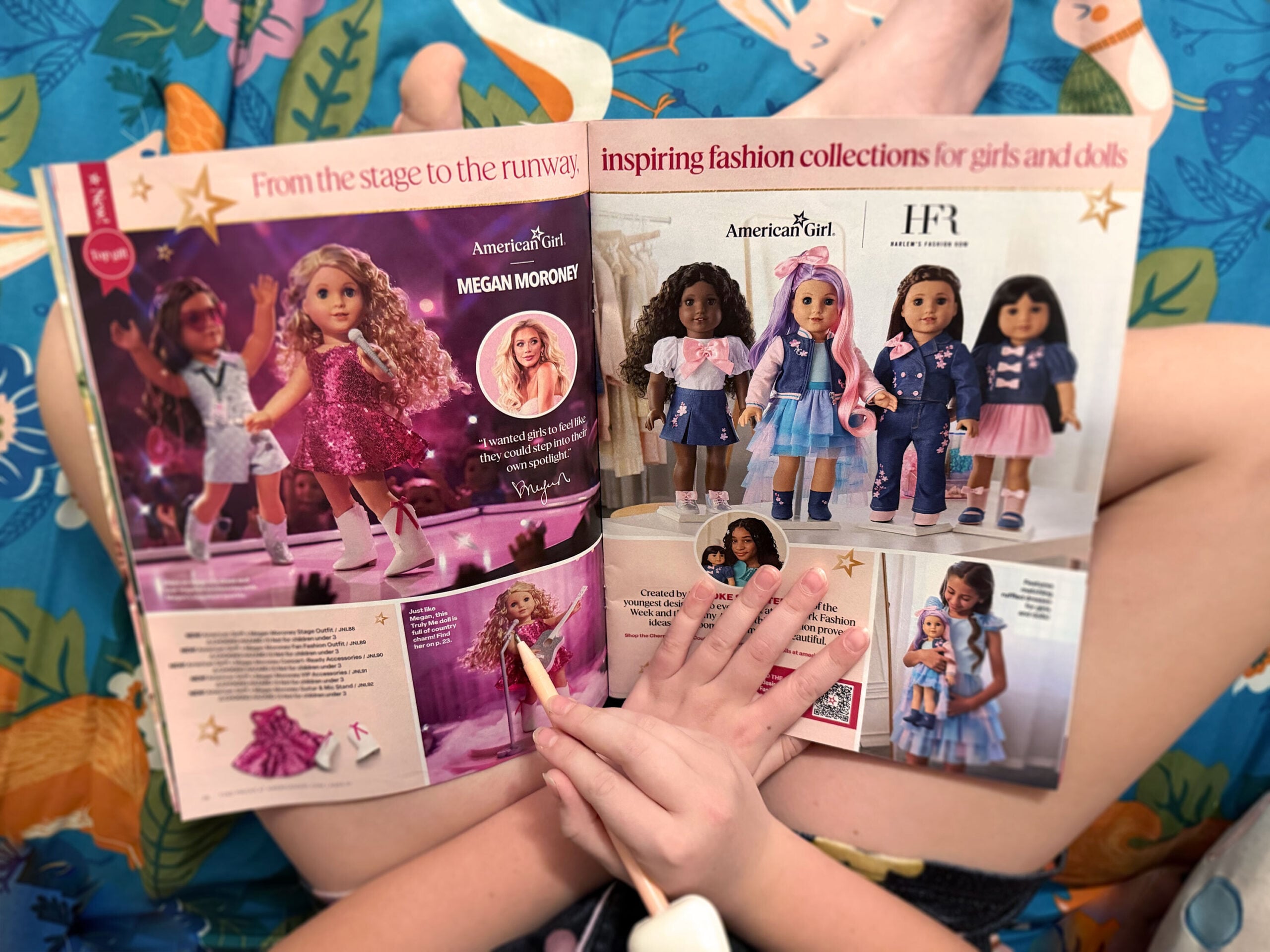
Samantha. Kirsten. Molly. Felicity. Addy. Josefina. Kit. Kaya. If you identify as a millennial or Gen-Z woman, chances are these names mean something to you.
As a proud ‘97 baby straddling the line between those two generations, I grew up amidst what some might consider the heyday of American Girl dolls.
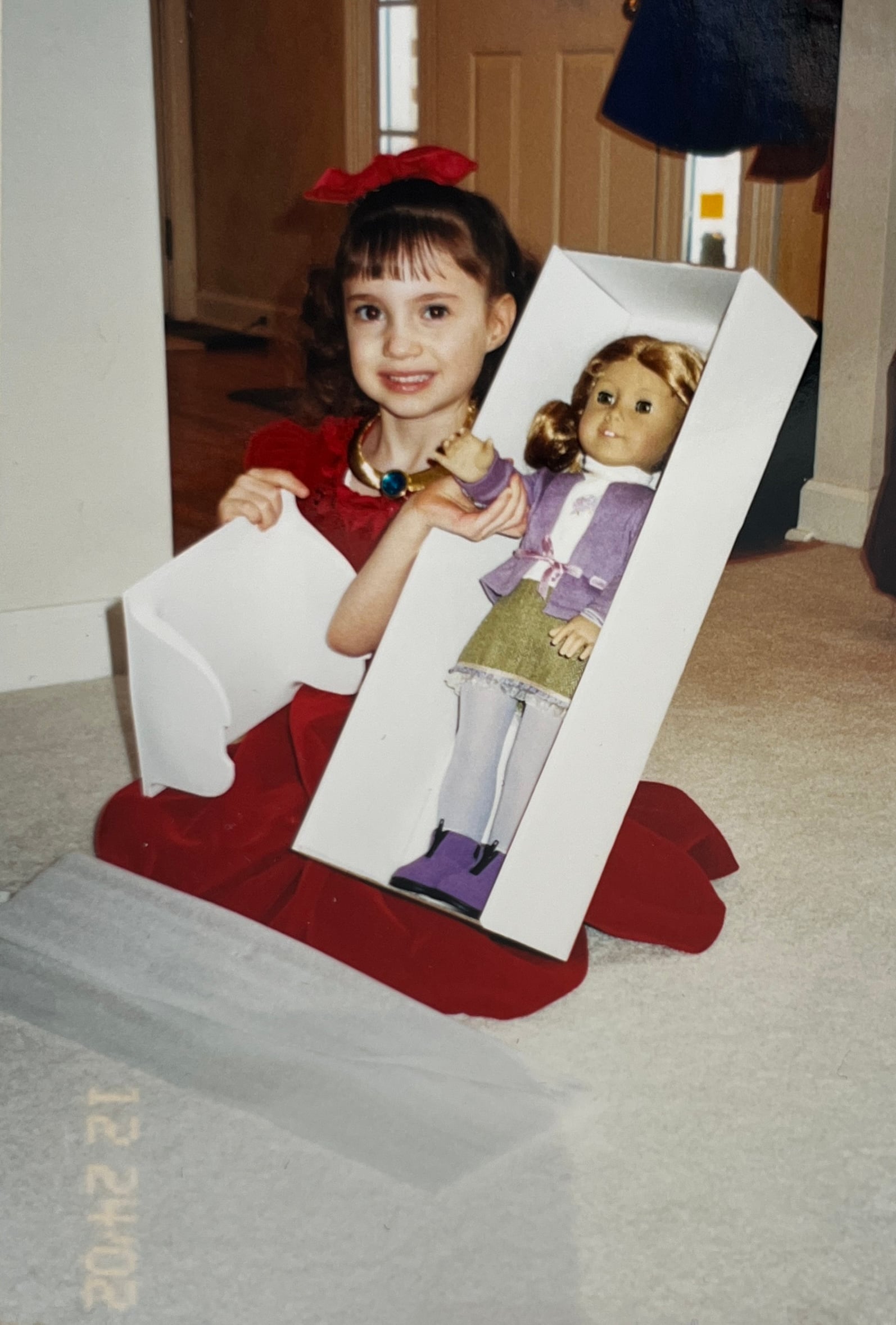
My sisters, cousins, and I read each girl’s books and took turns studying the Christmas catalog every year—building our unrealistic wish lists one dogeared page at a time. Making the pilgrimage to the flagship store in Chicago changed my brain chemistry forever; for an 8-year old American Girl doll fiend, there’s no better way to spend an afternoon than having a tea party with your freshly madeover doll sitting next to you at the café table. This immersive experience is just one of the many touchpoints that make the American Girl doll brand so powerful to this day.
American Girl has an intangible magic, the source of which lives in the ever-evolving ecosystem of the brand. It extends far beyond the dolls themselves into the accompanying literature, engaging retail experiences, and diverse product lines—“chocolate cake with vitamins,” as founder Pleasant Rowland put it. Greater than the sum of their parts, these interconnected elements create multiple entry points for meaningful brand engagement—the building blocks of American Girl’s staying power even 40 years after its founding.
Historical Characters & Edutainment
Inspired by a trip to Colonial Williamsburg, author and educator Pleasant Rowland founded American Girl in 1986 with a very deliberate goal in mind: to sell stories, rather than toys. Each doll she created, she paired with original historical fiction books geared toward girls ages 8-12. The intent was to integrate education and play, inviting her young audience not only to learn about the diversity of American history, but also to see themselves in these stories. Eight classic characters form the core of the American Girl doll brand, representing different corners of United States history and serving as springboards for children to explore these complex themes and time periods further.
Samantha Parkington (1986 release)
An orphan raised by her wealthy grandmother, grows up among Victorian-era class divides and the burgeoning women’s suffrage movement in 1904 upstate New York.
Kirsten Larson (1986 release)
A Swedish immigrant whose family settles in Minnesota in 1854, endures the hardships of pioneer life and starting over in a new place.
Molly McIntire (1986 release)
A Scottish-American girl living in 1944 Illinois, navigates the challenges of the Great Depression while her father serves overseas during WWII.
Felicity Merriman (1991 release)
A spirited girl in 1774 colonial Williamsburg, lives through the growing tensions between the Patriots and the Loyalists as the Revolutionary War looms.
Addy Walker (1993 release)
Born enslaved in North Carolina, escapes to freedom in Philadelphia with her mother in 1864 and longs for the day that her whole family will be reunited.
Josefina Montoya (1997 release)
A sensitive girl mourning the loss of her mother, grows up in 1820s New Mexico during a unique time in history—before New Mexico becomes a U.S. territory, but after Mexico gains independence from Spain.
Kit Kittredge (2000 release)
Who dreams of becoming a journalist, grows up in 1934 Cincinnati after her father’s business fails and her family loses their home.
Kaya (2002 release)
A niimíipuu girl indigenous to the Pacific Northwest, grows up learning horsemanship and tribe responsibilities in 1764 before European colonization.
Each classic doll originally came with her own series of six books that told her story. According to American Girl, all of these characters were shaped by an advisory board of historians, museum curators, and community leaders who review book drafts and product details to ensure that every detail is authentic and accurate. Rowland’s goal was “to show girls that they are part of a long line of strong, smart, confident, and courageous women who have had an important role in the creation of this country and the future of this world.” So the educational component extends beyond strictly history into lessons around developing personal values. Young girls can see how Kaya responds to making a mistake, or how Kit builds resilience during difficult times for her family, and they can internalize those lessons as they navigate challenges in their own day-to-day lives.
Inviting young girls to connect with these stories on a personal level also invites their emotional investment in the dolls and their worlds. And as any skilled marketer knows, emotional investment often gives way to monetary investment. The accompanying accessories, furniture, and companion dolls—all sold separately—become even more enticing to young girls when they see the dolls as reflections of themselves.
A Luxury Worth Investing in: Doll Hospital Repair Service
That emotional investment extends into taking care of the physical dolls as collectors items, rather than cheap toys that are easily disposable. One key way American Girl encourages this level of care is through its Doll Care Center.
Originally launched as the American Girl Doll Hospital in 1988, the Care Center is the brand’s dedicated repair and restoration service that includes skin cleaning, hair brushing, and restyling by trained technicians. When dolls return home after five to seven weeks—accompanied by a “Certificate of Good Health” and a get-well card—they are dressed in hospital gowns, socks, and ID bracelets as if they were treated in a real hospital. This practice almost anthropomorphizes the dolls and helps to establish them as pieces worth repairing, rather than replacing like many other toys. They are not meant to be a passing fad in a child’s life, but a more permanent fixture to be passed down from generation to generation. The Care Center contributes to the dolls’ longevity and capacity to become collectors items.
Customizable Dolls
A more recent strategy American Girl has employed—and another effective way to encourage emotional investment in its products—is the option for customization. The brand’s customizable line of dolls launched in 1995 under the name, “American Girl of Today,” which was rebranded to “Just Like You” in 2006, “My American Girl” in 2010, and “Truly Me” in 2015. Unlike the historical characters, these dolls have no fixed backstories or eras, leaving their personalities up to children’s imaginations.
From its inception, this particular product line has grown to offer more than 135 different combinations of face molds, skin tones, eye colors, and hairstyles to better represent the rich diversity of its customer base. American Girl has also introduced boy dolls into the line, as well as options like bald dolls and dolls with hearing aids. The level of inclusivity across these customizable dolls offers options to children of different cultural backgrounds and abilities who might not otherwise be represented by other toys in the market.
Separate from the “Truly Me” line of American Girl dolls is the option to truly customize every detail about your doll—face shape, skin tone, eye color, hair color and style, and add-ons like freckles, ear piercings, and braces. “Create Your Own” dolls, made available in 2017, are assembled according to customers’ exact specifications—and because they are made to order rather than selected from pre-existing inventory, they come at a higher price point than dolls from other product lines.
These different levels of customization offer a modern alternative to American Girl’s original products steeped in history and tradition, demonstrating the brand’s efforts to encourage self-expression and represent their customers more widely.
Inherently Collectible: Girl of the Year
As the American Girl brand evolves to keep pace with modern trends, it remains important to stay true to its historical roots as well. One way American Girl achieves this goal is through its “Girl of the Year” line. Every year, the brand releases a new contemporary doll—each tied to a topical present-day theme and sold for a limited time before being retired. This line follows a model similar to the classic historical dolls where each girl has a unique identity and backstory—as told in chapter book form—but that backstory is tied to the year she is released, rather than an era of American history.
American Girl launched its “Girl of the Year” beginning in 2001 with a character named Lindsey Bergman, though that official branding didn’t take shape until 2005 with the release of Marisol Luna. The temporary nature of each “Girl of the Year” is strategic in the way it manufactures scarcity—because these dolls are only available for a limited time, they are inherently collectible. Additionally, the dolls’ diverse backgrounds and stories from year to year help American Girl to continue connecting with an ever-evolving contemporary audience—one that values representation and real-world issues.
How to Hook a Younger Audience: Bitty Baby & WellieWishers
Though American Girl’s core audience is girls ages 8-12, another key audience the brand has cultivated strategically is composed of younger children.
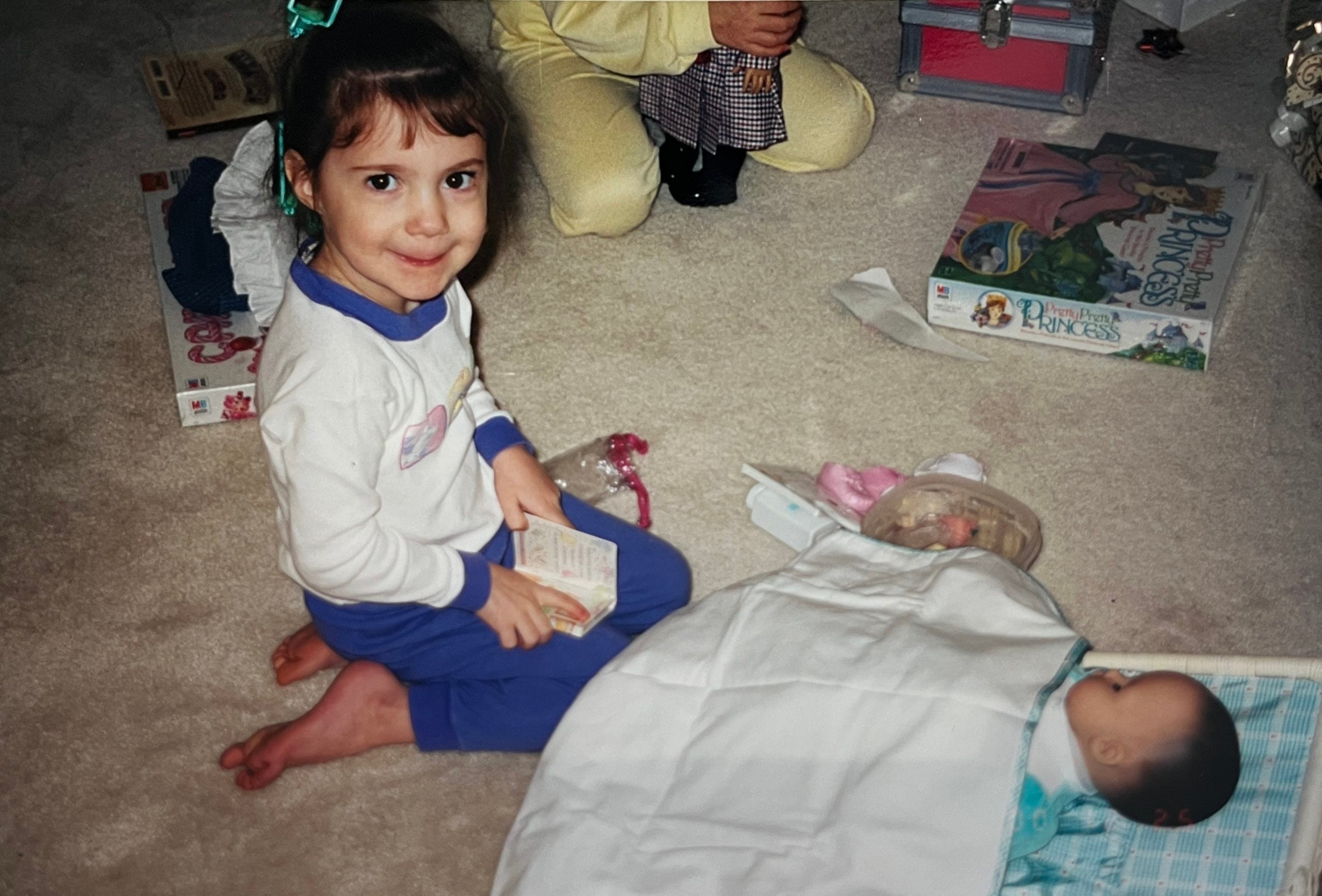
Geared toward toddlers, “Bitty Baby” is the baby doll product line of American Girl, which has been part of the catalog since the mid-1990s. Accessories include clothing, cribs, strollers, changing tables, feeding sets.
In certain ways, “Bitty Baby” serves as a starter doll for girls who are not yet old enough to properly appreciate or care for a traditional American Girl doll. It’s an invitation for toddlers to step into the world of American Girl, become fond of the brand, and naturally age into its other product lines designed for older children. Even American Girl’s own marketing copy describes “Bitty Baby” as “the stepping stone to more forever friendships with other American Girl dolls.”
The next rung up in that tier is “WellieWishers,” designed for ages 4-7. Launched in 2016, the product line includes six dolls that are smaller than classic American Girl dolls. They are also more accessible to the general public, as they are less expensive than most American Girl products and sold at big box stores including Target, Kohl’s, and Costco. Similar to the classic historical dolls, “WellieWishers” involve their own worldbuilding in the form of illustrated chapter books and even an animated series. This supplemental media is designed to deepen young girls’ investment in the world of American Girl with age-appropriate lessons around social and emotional learning.
Together, these two product lines bridge the gap for younger girls who aren’t ready for the investment of a classic American Girl doll, priming them to step into that world when they eventually come of age.
American Girl Place: The Epitome of Experiential Retail
Beyond the products themselves, another key facet of the American Girl doll brand is its immersive retail experience, with several flagship stores around the country.
The first American Girl Place opened in Chicago in 1998 with a café and bistro—complete with fun-sized chairs and dishware so your doll can join you at the table—a doll salon for restyling their hair and piercing their ears, a live theater with musical performances, an in-house doll hospital, and a photo studio for customers to get their photos taken as if on the cover of American Girl Magazine.
Though the store locations and offerings have evolved over the years, the goal has remained the same: to be a destination where customers can truly steep themselves in the world and values of American Girl. Existing somewhere along the spectrum between toy store and theme park, American Girl Place converts a shopping trip that might otherwise feel transactional into an event—inviting shoppers to make meaningful memories alongside the dolls and people with whom they share the experience. With storytelling, play, care, and collecting all under one roof, American Girl’s stores function as a microcosm of the brand itself.
To be continued…
You might also like:
Rare Bird delivers versatile marketing and digital solutions to diverse clientele across nearly every industry. Ready to leverage our expertise to address your business needs?
Let's talk.